Here I am, in my attic-cum-study, hoping the roof will hold and the bucket won't overflow, and finding myself not quite mistress in my own home, what with the water sneaking in through loose tiles and my new story showing me who's boss (not me).
I had this silly idea for a picturebook about a nasty kid who ends up (or thinks he is going to end up) in a 'boy sandwich' at the hands of his two aunts who may or may not be witches.
It seemed pretty straightforward so I picked that idea out of the project box and started working on it, i.e I opened a brand new Word document, saved it as 'Boy Sandwich' and started typing. And then stopped. And started again, with a different opening. After I did that three or four times, I declared to my typing self: ''There's something wrong''.
I thought about it for a while and realised it wasn't the writing that was causing trouble; it wasn't finding the right words to launch the story that was proving tricky. It wasn't even the story itself. It was a) the main character (evil boy) and b) the format (picturebook).
I've written a few nasty-character stories in the past and imposed some terrible fate on them or given them a glorious ending. But for some reason, last week, I found that the boy in the Boy Sandwich project refused to be treated as a nuisance. That he demanded to be painted as a human being with light and shade, good points and bad points. The works.
As a result, the size and shape of a picturebook didn't work anymore, as my Boy needed more space to plead his case and develop. I'm now 1700 words into the story and Boy has yet to meet the Aunts, and I can already see places where I'll have to go back and add bits so that it all makes sense and isn't rushed.
I've no idea where this is going (as my original ending worked really well for a picturebook but might look a bit slim and 'babyish' in the new order of things) or how long it'll take us (me and the boy) (or rather the boy and me) to get there. Even the whole sandwich business may have to go out the window... and perhaps be recycled in some later project!
Exciting times...
(The flummoxed rooster, wondering in actual fact how he can get rid of his hiccups, is from La véritable histoire du coooq Figaro, written by yours truly and illustrated by Dorothée Jost)
Showing posts with label characters. Show all posts
Monday, 6 September 2010
Wednesday, 14 April 2010
First Encounter
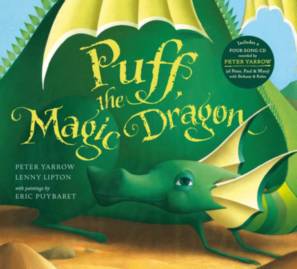
This morning I received a copy of my first publication in English! It's the translation of a picture-book published last year in France, called A la Recherche du Bonheur/In Search of Happiness, and it's illustrated by an award-winning French artist, Eric Puybaret. You may have encountered his rendering of Puff The Magic Dragon.
I'm more than a little nervous at the idea of reading somebody else's translation of my story, so for the moment I'll just look at the cover. It's the same as the French one, but hey! they've added both our names on it! Thanks, Hammond!
This is encouraging. Let's have a peep inside. Of course, all the pictures are the same, and the story seems to be all there, but... where is my hero? where is Manoug? He seems to be gone, replaced by one Alexander. Okay, why not? It's a surprise, though.
Let's see what else has changed.
And this is when I realise I'm the person the least qualified to judge this new incarnation of my book. It's got nothing to do with the translator's job (Andrew Weller). That's fine. But as I read his words, I keep hearing mine and thinking: but where's this rhyming bit? And the rhythm there isn't quite the same, is it? Well of course it isn't! Had I done the translation, I would have played around with the text much more than Andrew did. But it wouldn't have been a translation so much as a rewriting and that wasn't Andrew's mission.
So, really, what I need is for you to read this book and tell me what you think. Here's a (non-exclusive) list of adjectives to choose from: great, superb, splendid, fantabulous, amazing, awsome, unputdownable, unputaside-able, marvelous, magnificent, wow. That's all for the pictures, of course! ;o)
Here are a few more, just to celebrate. Enjoy!
I'm more than a little nervous at the idea of reading somebody else's translation of my story, so for the moment I'll just look at the cover. It's the same as the French one, but hey! they've added both our names on it! Thanks, Hammond!
This is encouraging. Let's have a peep inside. Of course, all the pictures are the same, and the story seems to be all there, but... where is my hero? where is Manoug? He seems to be gone, replaced by one Alexander. Okay, why not? It's a surprise, though.
Let's see what else has changed.
And this is when I realise I'm the person the least qualified to judge this new incarnation of my book. It's got nothing to do with the translator's job (Andrew Weller). That's fine. But as I read his words, I keep hearing mine and thinking: but where's this rhyming bit? And the rhythm there isn't quite the same, is it? Well of course it isn't! Had I done the translation, I would have played around with the text much more than Andrew did. But it wouldn't have been a translation so much as a rewriting and that wasn't Andrew's mission.
So, really, what I need is for you to read this book and tell me what you think. Here's a (non-exclusive) list of adjectives to choose from: great, superb, splendid, fantabulous, amazing, awsome, unputdownable, unputaside-able, marvelous, magnificent, wow. That's all for the pictures, of course! ;o)
Here are a few more, just to celebrate. Enjoy!
Wednesday, 17 March 2010
Respect
Have you ever heard of Fred Vargas? She's French and she writes crime fiction 'for big people' (as Eoin Colfer would put it). She's been translated into a fair few languages, including English, so you have no excuse not to go and have a look at her stuff as soon as you're finished reading this post.
Her books are truly quite fab: they're sophisticated but extremely readable, they're fun and they're not afraid to, sometimes, border on the absurd. The plots are intricate and intriguing, and the resolutions usually clever and unexpected.
But, to me, the most important aspect of her writing is the immense fondness and respect I sense Vargas has for her characters. I'm thinking in particular of the trio who live in the Disgrace (a rotten dump of a house) and make regular appearances in the novels. These three young men are historians and they share the Disgrace (pun probably intended) with a fourth, older man. On seeing his younger housemates standing each in the arch of a Gothic window, he coins them 'The Three Evangelists' (which is the title of one of the books in English).
And here's where respect comes into it: the third-person narrative adopts this denomination, with a hint of humour, but never a drop of mockery. From this point on, the members of the trio are equally referred to as Lucien or Saint Luc, Matthias or Saint Matthieu, Marc or Saint Marc. Similarly, all three historians have their own way of speaking, which more often than not reflects their areas of expertise. Again, the narrative picks up on this, describing a meal in medieval terms or relating the friends' meetings as if they were war councils. And you can imagine what a shopping trip by a Prehistorian can sound like...
This trick gives the books a very special flavour and as a result they feel quite organic. And seeing the writer so fond of her characters and so proud of them too, the reader can't help but feel in a similar way.
In other words, I'm very impressed and possibly a tiny bit jealous!
Her books are truly quite fab: they're sophisticated but extremely readable, they're fun and they're not afraid to, sometimes, border on the absurd. The plots are intricate and intriguing, and the resolutions usually clever and unexpected.
But, to me, the most important aspect of her writing is the immense fondness and respect I sense Vargas has for her characters. I'm thinking in particular of the trio who live in the Disgrace (a rotten dump of a house) and make regular appearances in the novels. These three young men are historians and they share the Disgrace (pun probably intended) with a fourth, older man. On seeing his younger housemates standing each in the arch of a Gothic window, he coins them 'The Three Evangelists' (which is the title of one of the books in English).
And here's where respect comes into it: the third-person narrative adopts this denomination, with a hint of humour, but never a drop of mockery. From this point on, the members of the trio are equally referred to as Lucien or Saint Luc, Matthias or Saint Matthieu, Marc or Saint Marc. Similarly, all three historians have their own way of speaking, which more often than not reflects their areas of expertise. Again, the narrative picks up on this, describing a meal in medieval terms or relating the friends' meetings as if they were war councils. And you can imagine what a shopping trip by a Prehistorian can sound like...
This trick gives the books a very special flavour and as a result they feel quite organic. And seeing the writer so fond of her characters and so proud of them too, the reader can't help but feel in a similar way.
In other words, I'm very impressed and possibly a tiny bit jealous!
Subscribe to:
Comments (Atom)