Showing posts with label translation. Show all posts

Friday, 13 May 2011

Busy, busy

 After a couple of months of "far niente" (ie, writing board books, game books and stocking up on trivia for a forthcoming info book), I've recently got stuck in a new translation. And quite a task it is: over 350 pages of dystopian teen sci-fi involving genetic and environmental issues, politics, love and a couple of child-births.
The book is called Prized and it's the second in the BirthMarked trilogy by US writer Caragh M. O'Brien. It's very different in feel and style from the other series I've been working on, so it's an added challenge, but a welcome one, too, as I get to exercise a different part of my brain/dictionary. I really like what O'Brien has made of Gaia, the heroine, in this second instalment and I'm looking forward to showing it to her French fans...

Saturday, 23 April 2011

Reading with your ears

A brilliant article on the trickiness and stakes of translation over on the Guardian's website.
"It has to sound as though it were written in English – though with enough of the accent of the original to remind you constantly, in reading, of the text's beginnings... The translator's art is a transparent, inconspicuous one."

Wednesday, 2 March 2011

Why we do what we do...

Remember I mentionned Berlin Fang, a literary translator I met at Annaghmakerrig last year? We had great conversations about the job of translator and recently Berlin wrote a post on chinadaily.com about just that. For a fascinating (and inspiring, and comforting!) answer to the question of this post's title, just click.
You will find out why we shouldn't do it:
"At present, most publishers pay about 65-100 yuan ($10-15) per thousand words for literary translation, no matter how good you are. You know that words are cheap because the rate has remained at this level for decades. The rate is so pathetic that I once considered giving up translation in pursuit of a career as a pig farmer."

... and why we do it anyway:

"It's my secret dream that one day or one night, a Chinese author reads a book I have translated and bangs on the desk: "I didn't know that novels can be written like this! I can do that!" There, the circle of life for writers goes on."

Wednesday, 17 November 2010

Alcatraz, book 3

These days, I'm busy doing lots of things, one of which being the translation of Alcatraz Versus the Kights of Crystallia into French. Like the other two books, it's fast and fun, and it has its share of untranslatable puns, including something to do with riding hogs (as in bikes... or pigs) (precisely). I shall try my best!

Tuesday, 29 June 2010

On the topic of translation...

Chatting with Berlin Fang, a literary translator who has recently been working a lot on making Colm McCann's works accessible to Chinese readers, I was reminded of this piece I wrote for CBinfo a while ago on the topic of translating children's books. You've possibly read it before, but if not, here goes:
The Next Best Thing: Translating Children’s Books

There is no such thing as a blank page when you translate. That’s the beauty of it. The original might not be the best book ever written, but it is written and all you have to do as a translator is write it again; a piece of cake, when you have a plot, characters and everything nailed down, even the description of the hero’s favourite duvet cover. But there is a catch of course, as the real job of the translator is to find the right balance between maintaining the ‘exotic’ aspect of the original and making it accessible to the new reader. Here are a few pointers on how to achieve this:
• Do translate into your mother-tongue. No matter how brilliant you are in an adopted language, you’ll never be absolutely faultless and fluent, and that’s what you need for translating literature. This means that people whose mother-tongue isn’t English are potentially busier than those with English as their first language. Why? Because in the UK, only about 3% of children’s books are not originally written in English, whereas in France, for instance, 30-40% come from abroad. In their search for the next big thing, publishers in continental Europe appear on the whole a lot more open to foreign talent.

• Do not rewrite the original, however tempting. As a translator, you are allowed to correct mistakes (for example if the original contains a week of two Mondays or says John when it means Mary), but you can’t cut out a description that seems boring to you or edit out a scene which you feel is too violent or soapy. You can, however, manifest your feelings to the editor and make suggestions. He or she will then make the decision. Sometimes, the only solution is to leave out something: such as an untranslatable joke, or a cultural reference that will mean nothing to the new readers without extensive notes.

• Do work within the limits of the language you’re translating into. Not all languages are as rich as English when it comes to light or sound description, for example. And not all of them are as tolerant of repetition. So the glint of the gleaming moon that shone gently over the glistening roofs may have to go.

• Do compensate. It’s allowed! If you feel poetic effect was lost in one scene, maybe you can introduce more lyricism somewhere else. Humour, when it is based on puns (the bane of the translator), can be shuffled around in a similar manner.

• Do not be too faithful to the original. Imagine working on something like the Harry Potter series where all the names mean something (think of Grim/auld Place or Lavender Brown). If you leave them as they are, then you’re depriving your readers of some insight into a character or a location.

• Do not write an encyclopaedia when you’re translating a novel. Translation isn’t just about language; you’re also moving from one culture to another and you don’t want to lose anybody in the journey. Take a school story written, say, in Ireland. Chances are that the children from the next-door country will have no idea what age a fifth-class student is supposed to be or what assembly is or how come classes are over by 1.30pm and so on. The last thing you want to do is to over-burden the text with footnotes, glossaries or encyclopaedic appendixes on whatever educational system the characters have to put up with.

• Do translate for real-life readers. You’re not here to impress lecturers or fellow translators with a clever interpretation or daring linguistic acrobatics. The translator needs to convey meaning, yes, but also style, pace, suspense, humour, feeling and all the range of emotions the author intended. So the translator must be something of a writer him/herself. The translated text must flow as well as the original, with no strangeness in the language and all necessary extra information kept as unobtrusive as possible. In other words, the reader of a translation must feel as if the book was written for him or her in the first place. The first and last rule of translation is readability.

To me writing is something fragile as a soufflé. I know I can write only when I am actually writing. When I stop, the nice fluffy top of the soufflé collapses and I never have a guarantee that I can cook up another one. But translation is more like a Christmas cake: solid, essentially fool-proof, and feeding many more than the original recipe promised. So really, as a writer-translator, translating is the next best thing!

The fabulous week that was...

Fabulous house, glorious food, great people and fantastic work done, these seven days in deepest, darkest Monaghan went beyond expectations. So a massive thank you (again) to my sponsors, that was one big birthday present! And a hullo to my new acquaintances from far and further. (I'll let you decide for yourselves which of Dingle or Melbourne is 'further'.) As a result of this week, I have:
1) read a vampire book, which hadn't happened in a decade or so;
2) written a bunch of reviews and done a modest amount of editing;
3) dug up The Amazing Anna Moe and put her on such a healthy diet that she ended up 3000 words heavier. (Or longer, I suppose);
4) infused philosophy into Mad Cap and Fitzmarcel the Mysterious (ahem);
5) discovered where the word 'jazz' apparently comes from ;
6) learned about a writer's duty to their translator, a duty to be as specific as possible, in particular when it comes to family ties and Chinese translations (older or younger brother? grandfather on the mother's side or the father's side?) (there are no generic terms for 'sister' or 'brother' or 'uncle' etc in Chinsese);
7) eaten a schocking number of profiteroles doused in chocolate sauce (the lot home-made);
8) heard a stunning poem involving a birthday cake with black icing;
9) seen deer in the garden and
10) been served a pint of Smithwick's by an 87-year-old-and-kicking barmaid.
Oh, and I played a game of Jenga, too. Fabulous, I tell you!

Friday, 23 April 2010

Oddity

Some things just don't translate. You will be amazed (and perhaps saddened) to learn that 'belly button fluff' is one of these things. The French don't seem to have any. At least, they don't have a word for it.
(And yes, before you ask, that's the sort of major problems a humble translator like myself must face daily). (Amazing what you find in books, isn't it?)

Wednesday, 14 April 2010

First Encounter

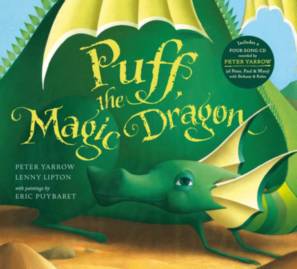
This morning I received a copy of my first publication in English! It's the translation of a picture-book published last year in France, called A la Recherche du Bonheur/In Search of Happiness, and it's illustrated by an award-winning French artist, Eric Puybaret. You may have encountered his rendering of Puff The Magic Dragon.
I'm more than a little nervous at the idea of reading somebody else's translation of my story, so for the moment I'll just look at the cover. It's the same as the French one, but hey! they've added both our names on it! Thanks, Hammond!
This is encouraging. Let's have a peep inside. Of course, all the pictures are the same, and the story seems to be all there, but... where is my hero? where is Manoug? He seems to be gone, replaced by one Alexander. Okay, why not? It's a surprise, though.
Let's see what else has changed.
And this is when I realise I'm the person the least qualified to judge this new incarnation of my book. It's got nothing to do with the translator's job (Andrew Weller). That's fine. But as I read his words, I keep hearing mine and thinking: but where's this rhyming bit? And the rhythm there isn't quite the same, is it? Well of course it isn't! Had I done the translation, I would have played around with the text much more than Andrew did. But it wouldn't have been a translation so much as a rewriting and that wasn't Andrew's mission.
So, really, what I need is for you to read this book and tell me what you think. Here's a (non-exclusive) list of adjectives to choose from: great, superb, splendid, fantabulous, amazing, awsome, unputdownable, unputaside-able, marvelous, magnificent, wow. That's all for the pictures, of course! ;o)
Here are a few more, just to celebrate. Enjoy!

Monday, 15 February 2010

Catching up

This is an in-betweeny sort of post. It's beeen a quiet week or two blogwise as I have been very busy with all sorts of things and I'm delighted to say that I Have Made Progress!
I've reached the end of the first draft of the new translation (Alcatraz Versus the Scrivener's Bones) and  that's the back of it broken, and a few more bones besides. I'm hoping to post more on the translating process à la Juliette one of these days.
I've also managed to squeeze a classic novel into picture-book format, yes the 32-page, 1000-word kind. I shall reveal all when the project is a bit nearer completion.
I've been to a most excellent workshop organised by Children's Books Ireland and the Ark and have learnt an awful lot. Again, you'll read more on this in the summer issue of Inis.
I have finally seen Avatar and confirmed that 3-D doesn't work for me. I have nothing against it, I just appear to have funny eyes...
I also finally sent out both my entry for the Kidlit contest and the manuscript for my Disaster David picture-book to a UK agent.
There's still plenty to do on all fronts, not to forget the intensive reading for the Bisto Book Award of which I am one of the judges. Meanwhile, I am in Paris for erm... research in erm... gastronomy and... erm French children's literature. A serious, educational trip. I shall communicate my findings in due course.

Thursday, 21 January 2010

Different countries, different looks

Here is the cover of the French translation (by yours truly) of Alcatraz versus the Evil Librarians, coming out this March. Have a look at the US paperback edition and the German cover. It's interesting to see the differences. I like what the Germans did; it's very much the fashion, that graphic approach, no characters, no scene, no decor. It makes it look like a Fantasy book (which it kind of is) and the cover should appeal to readers of Garth Nix's Sabriel series and to Cornelia Funke's fans (what with the book and all). The other two place the novel more in Sci-Fi than Fantasy, I think. The Americans went for the photo-collage, which I'm never a great fan of, but that's just me. Their Alcatraz looks quite the cool dude, it has to be said, and there's a lot of detail in the background that you wouldn't notice at first, so that the image is not too cluttered and yet ''full of surprises''. The French chose the photo option too, but their Alcatraz seems much younger, almost girly and oh no! he's wearing black shoes, which is a heresy, as I've just discovered while translating book 2. Oh well, we'll see if anybody brings it up. I like the airy, organised French library decor and the fact that the dinosaur is more immediately visible. Here too, there are plenty of details that you would only notice if you've read the novel. Finally, they did well with the font of the title: it conveys the spookiness and the humour of the book. Because, as you will have guessed, that series doesn't take itself too seriously. That's what makes it fun to translate.